
Roof leak advice
What to Do When Water Is Coming Through Your Roof
If water is coming through your roof, stay clear of electrical fittings, catch the drip if it’s safe, and move furniture and valuables out of the way. Don’t climb onto the roof or start pulling ceilings apart to find the source.
A leak indoors isn’t always directly below the problem outside. Water can run along timbers, felt, cables or the underside of the roof before showing on a ceiling or wall. Once you’ve limited the immediate damage, get the roof checked so the cause can be found and repaired.

Make the area safe first
Start with the room below the leak. Put a bucket or suitable container under the drip, then lay towels around it to catch any splashes. Move electronics, soft furnishings and valuables away from the area.
If water is near a light fitting, socket, fuse box or electrical cable, don’t touch it. Only turn off the electricity to that area if you can do so safely. If you’re not sure, call a qualified electrician.
Take care if a ceiling is bulging, sagging or visibly holding water. Keep everyone out of the room and don’t puncture or pull the ceiling down yourself. The weight of trapped water can bring down plasterboard or older ceiling finishes without warning.
- Use buckets, towels and plastic sheeting to protect floors and belongings.
- Take clear photos of the drip, staining and any damage if it’s safe to do so.
- Avoid ladders, getting onto the roof and temporary patches in windy, wet or unsafe weather.
- Keep children and pets away from a wet or sagging ceiling.
Try to narrow down when the leak happens
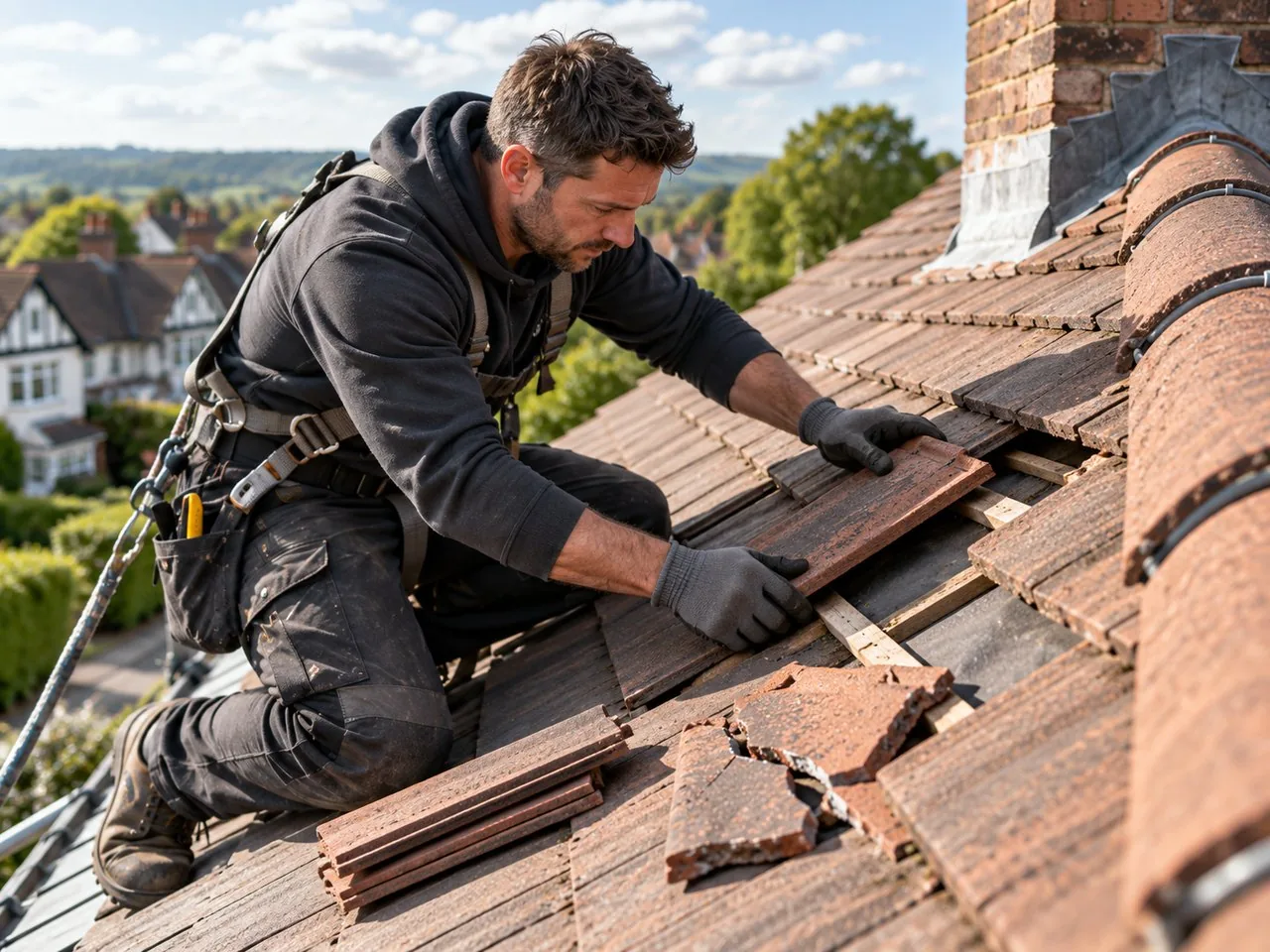
Make a note of what was happening when you first spotted the water. A leak during rainfall could come from tiles, slates, flashing, valleys, ridge details, chimney details or gutters. Water that appears after the rain has stopped can still be coming from the roof, as it can take time to travel through the structure.
If the problem is around a flat roof, standing water, split seams, damaged edges or failed joints could be the cause. A damp patch near a chimney may come from damaged flashing, cracked pointing or a problem higher up the stack, but it needs checking rather than guessing.
Condensation can also cause dampness in roof spaces, especially where moisture is spread over a wider area rather than coming from one drip. Fresh staining or water coming through the ceiling shouldn’t be put down to condensation without taking a proper look.

Common signs that a roof leak is developing
A small mark can be the first sign of a bigger problem, so it’s best to act before repeated water getting in damages plaster, timber or insulation. Look for changes inside and outside, but only inspect from ground level unless it’s safe to do more.
You might see one clear drip, or the signs may be less obvious at first.
Brown or yellow ceiling stains, damp patches or peeling paint.
A musty smell in a room or loft area.
Drips around a chimney breast, roof window, ceiling edge or light fitting.
Slipped, cracked or missing tiles or slates visible from the ground.
Loose flashing, damaged mortar around a chimney, or debris overflowing from gutters.
Water running down outside walls during rain instead of reaching the downpipe.
Why the drip may not show you the exact problem
Where water appears inside often isn’t directly below the damaged part of the roof. Rain can get beneath a cracked tile, damaged slate or split flashing, then run along a rafter or across the roof lining before dripping into the room below.
That’s why the repair needs to find where the water is getting in, rather than just covering the stain indoors. Repainting a ceiling before the roof is fixed may hide the evidence for a while, but it won’t stop more water getting in.
A roof leak can come from a small piece of damage, but the repair may still need careful work around valleys, chimney flashings, ridge tiles or a flat roof junction. A roof check can show whether it’s a local repair or a wider problem with the roof.
When to call a roofer
Call for help promptly if water is actively coming into the property, a ceiling is sagging, there’s an electrical risk, or you can see roof damage from the ground. It also makes sense to arrange a check for stains that keep coming back, even if they dry out between spells of rain.
At Morecambe Roof Repairs, we can inspect where the water is likely getting in, explain what we find and talk through your repair options. Most leaks need a focused roof repair, though a flat-roof problem, damaged lead flashing or chimney detail may need a more specific repair.
If the roof is damaged in several places or has reached the end of its useful life, we’ll explain whether a roof replacement is a better option than repeated patch repairs. That decision should come from what we find, not a guess based on the room below.
What affects the repair decision and cost
The cost of fixing a leak depends on what is causing it, how easy the area is to reach and whether the water has damaged more than the roof. Replacing a few tiles or slates is different from repairing a valley, renewing leadwork around a chimney or fixing a larger flat roof problem.
Tell the roofer when the leak started, whether it only happens when it rains, and whether it has got worse. Photos can help too. This gives a clearer picture before the roof is inspected, but the final repair advice should come from finding where the water is getting in.
Don’t rely on silicone or indoor sealants as a permanent fix. They may hold back a small amount of water for a while, but they won’t put right damaged tiles, failed flashing, cracked mortar or a worn roof.
After the leak has been repaired
Keep an eye on the repaired area during the next rainfall. Let damp plaster, insulation or timber dry before redecorating. If a ceiling has been heavily soaked, it may need a separate check and repair once the roof leak has been stopped.
It also helps to clear leaves and debris from gutters and check that downpipes are carrying water away properly. Blocked gutters can overflow onto walls and roof edges, causing damp problems that may look like a leak through the roof.
If you need advice about water coming through a roof in Morecambe, tell us where you’ve seen the water and when it appears. We’ll help you arrange an inspection and talk through the practical repair.
Frequently asked questions
Should I put a hole in a ceiling bulge to let the water out?
No. A bulging ceiling can hold a lot of water and may come down without warning. Keep the room clear, don’t touch the ceiling or nearby electrics, and arrange professional help to make the area safe and find the roof leak.
Can a roof leak stop by itself when the rain stops?
The dripping may stop, but the problem that let the water in is still likely to be there. Moisture can stay in insulation, timbers and ceiling finishes, and the leak may return or get worse during the next spell of rain.
How do I know if water is coming through the roof or from a gutter?
A roof leak may show as a damp patch or drip on a ceiling, while gutter problems often cause water to run down outside walls or overflow at the roof edge. The two can be connected, and a roofer can check the roof, flashing, gutters and downpipes instead of assuming one cause.
Is a small ceiling stain urgent?
A small stain isn’t always an immediate emergency, but don’t ignore it. It can show that water has got in before, and getting it checked early may prevent more damage to the ceiling and roof structure.
Can you repair a leak around a chimney?
Yes, leaks around chimneys can often involve flashing, leadwork, mortar, tiles or other chimney details. The source needs tracing carefully because water can travel from higher up the roof before it appears beside the chimney breast.
Need someone to check a roof leak?
Don’t wait for a small drip to cause more damage. Call Morecambe Roof Repairs on 01524123456 or get in touch to arrange a roof inspection and talk through the repair.