Roofing advice
How damaged lead flashing can cause roof leaks
Yes. Damaged lead flashing can let water into the roof where two parts of the building meet. This often happens around chimneys, where the roof meets a wall and beside a roof valley. Even a small split, lifted edge or loose fixing can allow rain behind the lead and into the roof space or walls.
The leak may not appear directly below the damaged lead. Water can run along battens, underlay or timbers before showing as a ceiling stain or damp patch. It is better to find where the water is getting in than rely on the indoor mark alone.
What lead flashing does
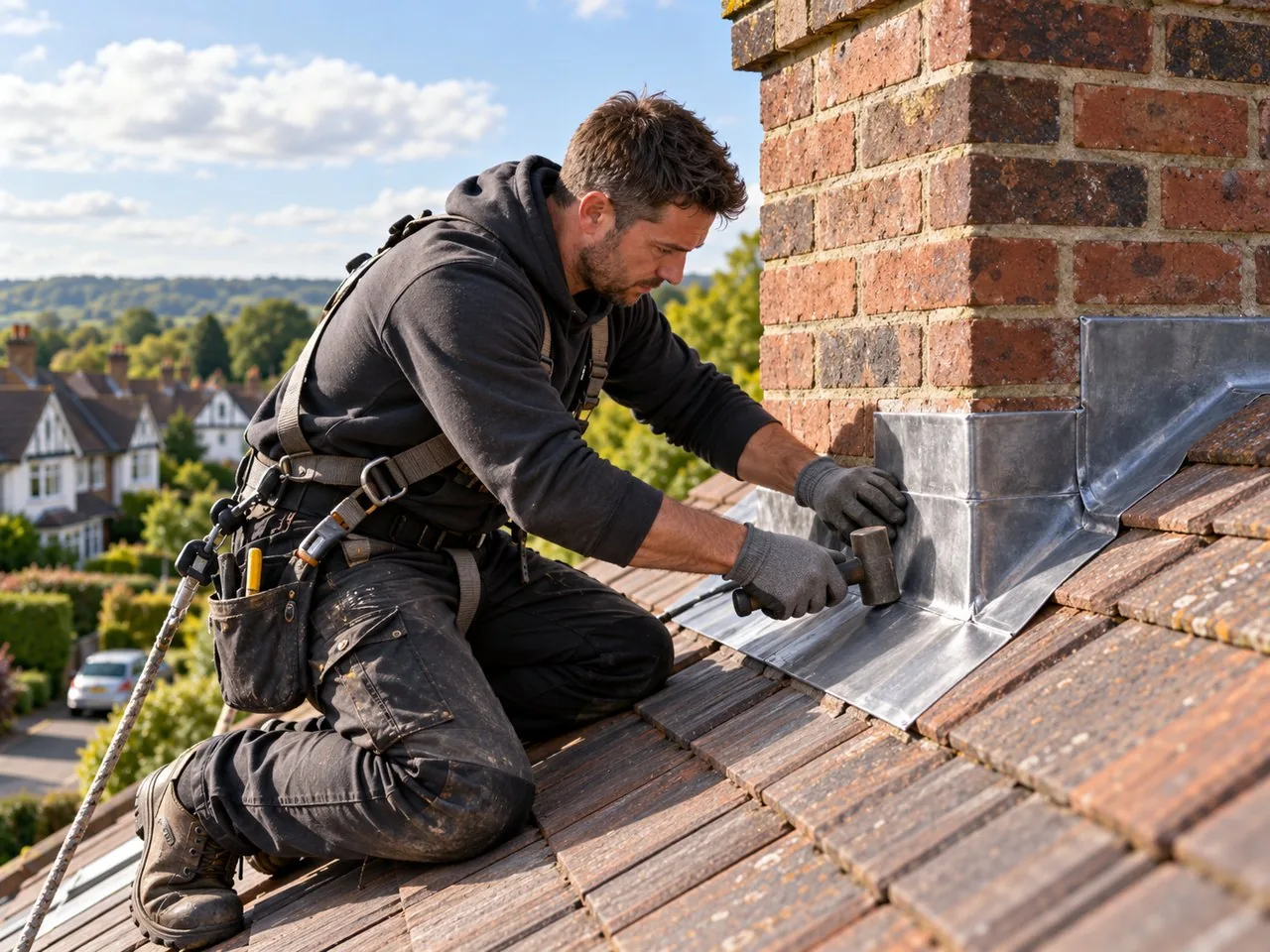
Lead flashing seals the join where tiles or slates meet another surface. You will often see it around chimney stacks, where a roof meets a wall, in valleys and where the roof changes level.
It directs water back onto the roof instead of letting it run behind the tiles or slates. The lead needs to be shaped properly, fixed securely and free from splits or gaps around the edges.

How flashing problems let water in
A crack or hole in the lead can let water straight under the roof. A lifted edge can cause the same problem, especially if the flashing is no longer sitting tightly against the wall, chimney or neighbouring tiles.
The lead is not always the only issue. Mortar around a chimney can break away, fixings can loosen and badly made joints can open up. Water can then get behind the flashing and into the roof below.
Split, torn or punctured lead
Lead that has lifted, slipped or pulled away from the brickwork
Open laps or joints between sections of flashing
Cracked or missing mortar holding stepped flashing at a chimney or wall
Gaps where flashing meets tiles, slates or a roof valley
Old patch repairs that have failed or come loose
Signs the leak may be linked to flashing
A damp patch near a chimney breast, at the top of an outside wall or on an upstairs ceiling can point to a flashing problem. Drips during or after rain are another good reason to have the roof checked.
You may also spot stains on loft timbers, wet insulation, loose mortar around a chimney, or lead that is creased, cracked or out of place. These signs do not always show exactly where the leak starts. Broken tiles, damaged valleys and other roof problems can cause similar symptoms.

Why lead flashing becomes damaged
Lead moves slightly as temperatures change. It needs room to move without tearing or pulling away from its fixings. If it has been fitted too tightly, unsupported sections can split or lose their shape over time.
Problems can also develop around chimney stacks and roof joins. Loose tiles or slates, crumbling mortar, movement in nearby parts of the roof and older repairs that do not direct water away properly can all stop flashing doing its job.
What to do if you suspect a flashing leak
Make a note of where and when the water appears. Take photos of stains or drips, and check the loft from a safe position if you can. Do not stand on ceilings, touch wet electrics, climb onto the roof or try to push loose flashing back yourself.
If water is coming in, protect your furniture and catch any drips while you arrange a check. A roofer needs to inspect the flashing, tiles or slates, chimney details and nearby roof joins, as the water may be getting in above the damp patch you can see indoors.
For homeowners in Morecambe, we can inspect suspected flashing problems and explain whether the lead needs repairing, partly replacing, or whether another part of the roof is causing the leak.
Repair or replacement: what affects the decision
A small, easy-to-reach area of damage may be repairable if the surrounding lead is sound and the flashing still holds its shape. Loose sections may need fixing back in place, while failed joints or mortar around stepped flashing may need repairing to stop water getting in.
Replacement may be the better option if the lead is badly split, heavily damaged, too short to cover the join properly, or damaged across several sections. Nearby tiles, slates, chimney brickwork and valleys also need checking. A repair needs to stop water getting in, not just hide the stain.
The cost depends on access, the size and position of the flashing, the damage around it and whether related roof or chimney repairs are needed. We will take a look and explain what is causing the problem before you choose a repair.
When to call a roofer
Arrange a professional check if you have an active leak, damp that keeps coming back around a chimney or roof join, visible flashing damage, or stains that worsen after rain. Getting it checked early can help limit damage to insulation, plaster and roof timbers.
Morecambe Roof Repairs carries out leadwork repairs, related roof repairs and chimney stack repairs. We will check the join, explain what we find in plain English and talk through the practical options.
Frequently asked questions
Can a small crack in lead flashing really cause a leak?
Yes. Water can get through a very small split, especially when rain is driven across a roof join and behind the flashing. Once it gets below the roof, it may travel before becoming visible inside the property.
How can I tell whether the leak is from flashing or a broken tile?
The position of the damp patch may give a clue, but it cannot tell you for certain on its own. Flashing, tiles, slates, valleys and chimney details need checking together because water can travel away from where it first got in.
Can lead flashing be repaired instead of replaced?
Sometimes. A small problem may be repairable if the surrounding lead is in good condition and the flashing still covers the join properly. If it is split in several places, badly misshapen or too worn to keep water out, replacement may be the better option.
Is damp around a chimney always a flashing problem?
No. Damaged flashing is one possible cause, but cracked mortar, damage to the chimney stack, loose tiles or slates, and problems higher up the roof can also let water in. A close check is needed to find where the water is getting in.
Concerned about damaged flashing?
Tell us where you've spotted the leak or damp patch. We'll take a look at the roof join and explain what needs repairing.