Roofing advice
Roof Repair or Roof Replacement: What Should Be checked?
A repair is often the right choice when the problem is limited to one part of a roof that is otherwise sound. Replacement may be worth discussing when problems are widespread, keep coming back or much of the roof is worn.
The choice should be based on the whole roof, not just the leak or broken tile you can see from the ground. Looking at the tiles or slates, flashing, ridges, valleys, roof structure and any signs of water indoors gives a clearer picture.
Start with the size and pattern of the problem
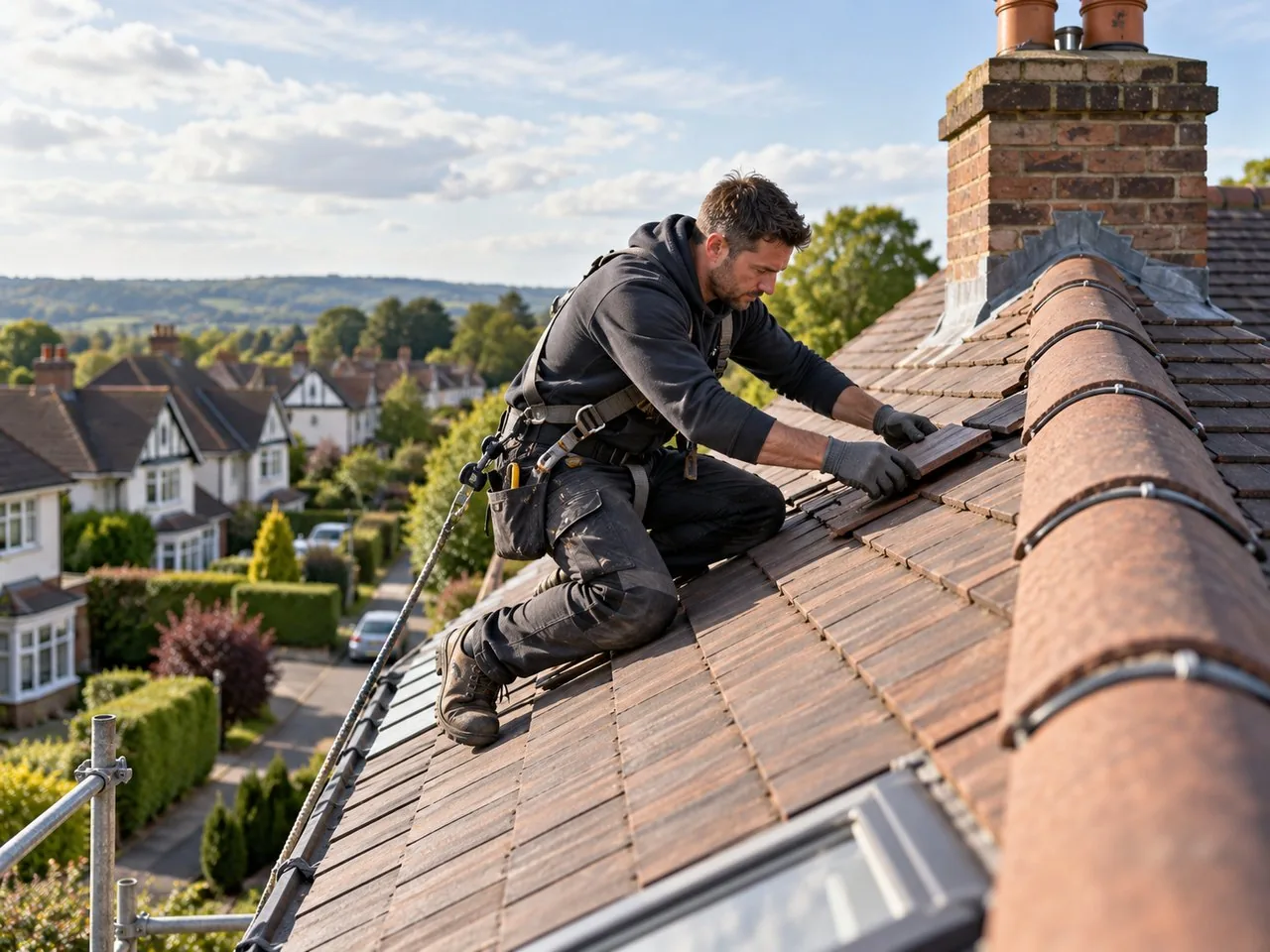
One slipped tile, damaged flashing or a small leak around a chimney does not automatically mean you need a new roof. If the rest of the roof is secure and in decent condition, a repair may stop the water getting in and protect the area around it.
It becomes more worrying when problems are showing up in several places. Repeated leaks, lots of cracked or loose tiles, failing ridges, worn valleys and repairs that keep coming back can mean patching one area at a time is no longer good value.
A problem in one small area may suit a roof repair.
Damage across several roof slopes needs a wider check.
Water can travel along timbers or beneath tiles and slates, so an indoor stain is not always directly below where it got in.
Check earlier patch repairs: have they held, or has the same problem come back?
Signs a repair may be enough
A repair is usually the more practical option when most of the roof is sound and the cause is clear and limited. This could be a few broken or slipped tiles or slates, loose ridge mortar, damaged flashing or a problem around a chimney.
The job is not just about covering a leak. It needs to deal with where the water got in, then check the surrounding parts are secure.
A small number of damaged, missing or slipped tiles or slates.
Damage to flashing around a chimney, wall junction or roof feature.
One damaged ridge or valley section where the surrounding areas are sound.
A small leak on a flat roof where the rest of the surface is in good condition.
A gutter or downpipe problem causing water to overflow onto one part of the building.
When roof replacement may be the better option
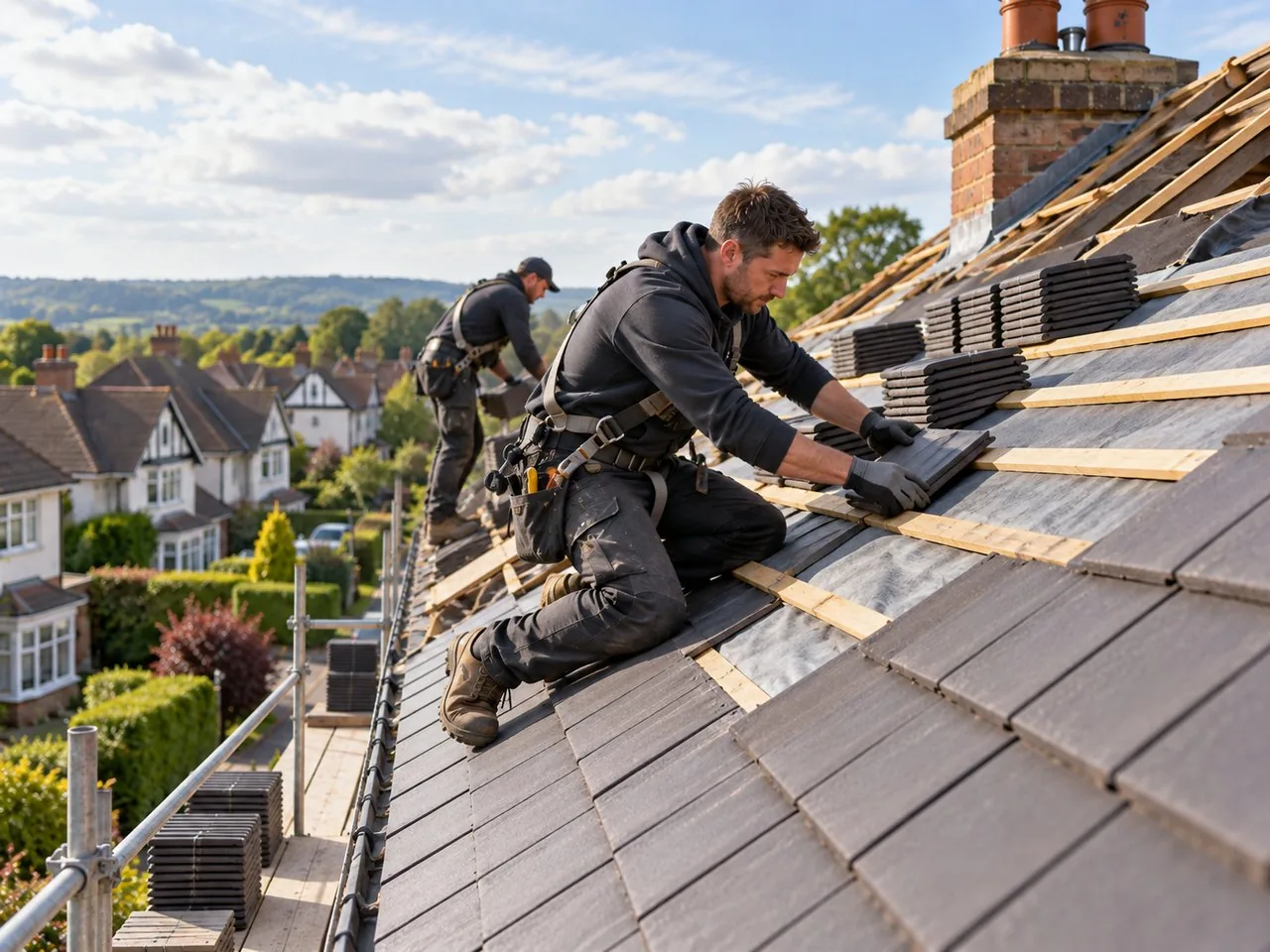
Roof replacement may make more sense if tiles or slates are failing in many places, or repairs would only buy a little time. It can also be the clearer option when the parts beneath the tiles or slates are in poor condition, as replacing a few surface tiles will not fix wider problems with battens or underlay.
Replacement is a bigger job, so one leak alone should not lead straight to that recommendation. Ask what is failing, how much of the roof is involved, which parts can stay and what repairs are likely if you only patch the current problem.
- Repeated leaks or water getting in at several separate points.
- Large numbers of loose, cracked, worn or slipped tiles or slates.
- Wear across a large part of the roof around ridges, valleys, flashings or chimney details.
- Worn battens or underlay beneath the roof.
- Repair bills building up without sorting the wider problem.
What to check before deciding
A proper look at the roof goes beyond the most obvious damage. It should include the parts that carry water away safely, including ridges, hips, valleys, flashing, chimney details, gutters, fascias and soffits.
Inside the house, damp patches, peeling paint, mould, drips or a musty smell can show that water has been getting in. They do not tell you the cause on their own, but they can help when someone looks at the roof.
- The condition and security of tiles, slates or the flat-roof surface.
- Flashing and leadwork around chimneys, walls, valleys and roof junctions.
- Ridge and hip tiles, mortar or mechanical fixings.
- Valleys and gutters, including whether water is backing up or overflowing.
- The chimney stack, where cracks, loose pointing or failed flashing may be letting water in.
- Visible damp in loft spaces, ceilings and walls.
- The condition of accessible timber, battens and underlay.

Flat roofs need their own check
On a flat roof, standing water, splits, blisters, lifted edges and failed joints may point to a small repair or a wider problem. It depends on how much of the surface is damaged. Drainage, edges and upstands matter just as much as a visible split.
A small damaged patch may be repairable if the surrounding surface is sound. If much of the surface is worn or water is getting in at several points, replacing the flat roof can make more sense than patching it again and again.
Compare value, not just the first price
The lowest price today is not always the lowest cost over time. A small repair can be good value when it fixes a clear problem on a roof with plenty of life left. But paying for separate patches again and again can become frustrating and expensive if the roof is wearing out generally.
Ask for a clear explanation of what has been found, what can be repaired, what replacement would involve and why each option has been suggested. This gives you something useful to compare, rather than choosing on price alone.
What to do if you are unsure
Do not climb onto the roof or try to lift tiles yourself. If water is coming in, move belongings away from the area, use a container for drips if it is safe, and make a note of when and where you have seen the problem.
For homeowners in Morecambe, we can take a look at the problem, explain what we find and talk through whether a repair or roof replacement makes more sense. You will then have a clearer idea of the work needed.
Frequently asked questions
Can a leaking roof always be repaired?
Not always. A leak from a broken tile, failed flashing or a small area of flat-roof damage may be repairable. But repeated leaks or wear across a large part of the roof can point to a bigger problem. The roof needs checking to find where water is getting in and how much of the surrounding roof is involved.
How do I know if I need a new roof rather than more repairs?
Look at the pattern of problems rather than one isolated issue. If repairs are becoming frequent, tiles or slates are failing in several areas, or the underlay and battens are worn, replacement may be the more practical long-term option. A proper check should explain why.
Can chimney flashing cause a leak that looks like a roof problem?
Yes. Flashing and leadwork around a chimney are common places for water to get in when they crack, lift or come loose. Water may then show up indoors some distance from the chimney, so the chimney details need checking alongside the roof.
Should I repair a flat roof or replace it?
It depends on the whole surface, not just the damaged spot you can see. A small split or failed edge may suit a repair if the rest of the surface is sound. If there are several leaks, widespread cracking, lifting or standing water, replacement may be worth discussing.
Need help choosing between repair and replacement?
Tell us what you’ve noticed and we’ll look at the roof, then explain whether a repair or replacement is likely to make more sense.