Chimney advice
Signs a Chimney Stack May Need Repair
Your chimney stack may need repair if you can see loose or missing mortar, cracked bricks, damaged flashing, a lean, damp marks on internal walls, or bits of brickwork on the ground. Water getting in around the chimney is another common warning sign.
Chimney problems often get worse when water keeps getting into the brickwork, mortar and roof details. You don’t need to work out the cause from the ground, but spotting a change early may mean a smaller repair before it reaches the roof or rooms below.
What to look for from the ground
Start with a safe visual check from ground level or an upstairs window. Don’t climb onto the roof, lean a ladder against the stack or touch loose bricks or pots.
A chimney sits above the roofline and takes the full force of the weather. Even a small problem with the pointing, brickwork or flashing can let rainwater in where it shouldn’t be.
- Mortar joints that look worn away, cracked, loose or missing
- Cracked, flaking or moved bricks on the stack
- A chimney pot that looks cracked, tilted or loose
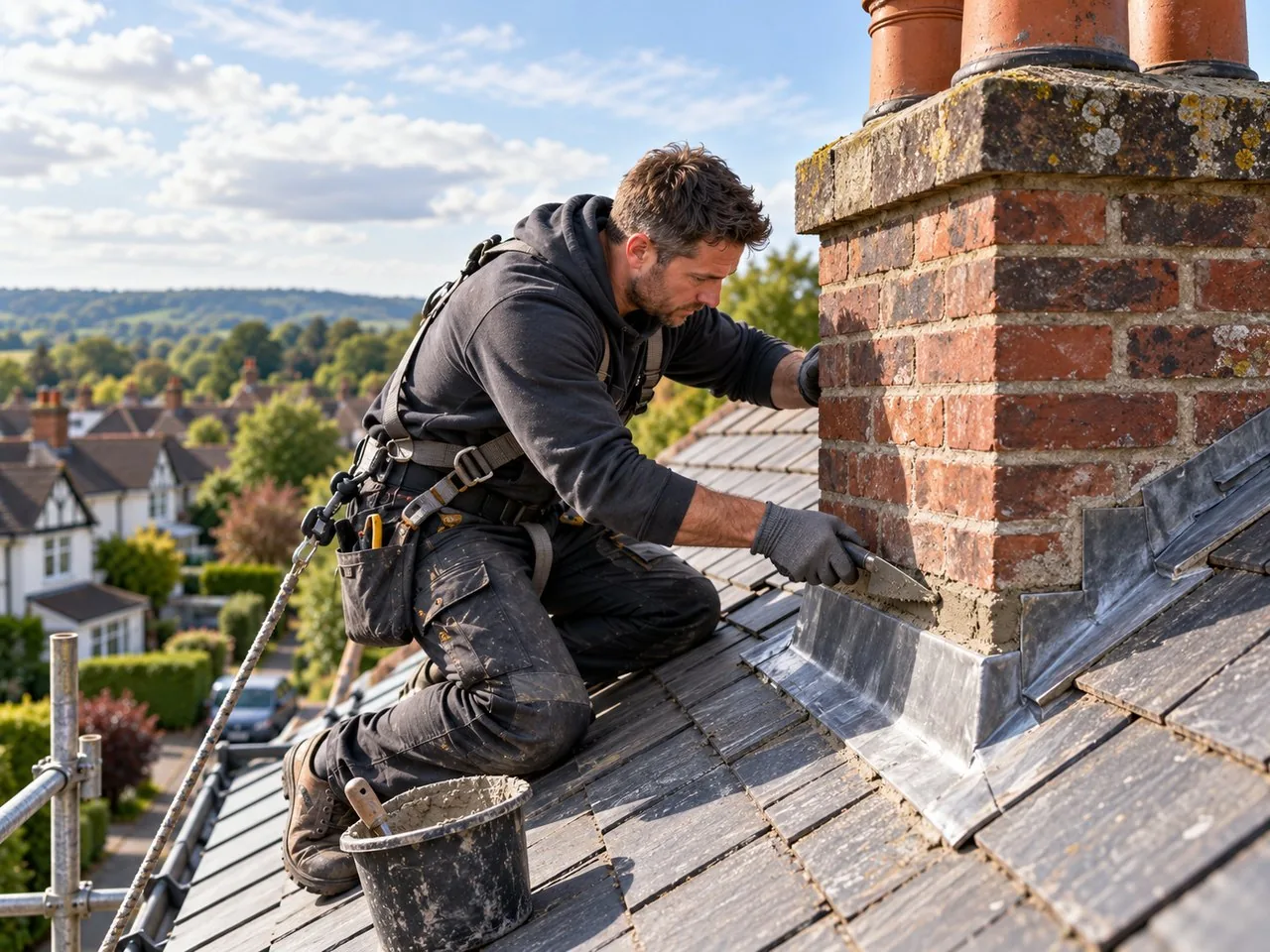
- Lead flashing that has lifted, split or pulled away from the brickwork
- Staining, damp patches or peeling paint on ceilings and walls near the chimney breast
- Small pieces of mortar, brick or lead on the ground below
- A stack that looks like it is leaning or has a visible crack through it

Why chimney stacks start to fail
The mortar between bricks wears away over time. Once the joints open up, water can soak into the stack. Repeated wet weather can then cause more damage to the mortar and brick faces.
Water can also get in where the stack joins the roof. Lead flashing and other chimney details protect this area. If the flashing is damaged or loose, water may run into the roof space or down the chimney breast, even when the nearby tiles or slates look sound.
Cracked or loose chimney pots, worn render and poor past repairs can also leave a stack open to the weather. Someone needs to take a look at the stack, its flashing and the roof around it to find the cause.

Damp around a chimney breast is worth checking
A damp patch near a chimney breast does not always mean the chimney stack is the cause. Condensation, plumbing problems and trouble elsewhere on the roof can leave similar marks. But if the staining gets worse after rain or appears near the top of the chimney breast, get the stack and flashing checked.
Keep an eye on any changes rather than just painting over the mark. Note when it appears, whether it spreads, and whether there is a musty smell, bubbling paint or damaged plaster. This can help show where the water is coming from.
When to get someone to take a look
Get someone to take a look promptly if bricks or mortar are falling, the stack looks unstable, a chimney pot is loose, or water is coming into the house. Keep people away from the ground below if there is loose brickwork, and don’t try to remove it yourself.
For less urgent signs, such as worn pointing or a small damp patch, it is still best to get it checked before the next spell of rain turns it into a bigger problem. We carry out chimney stack repairs for homeowners in Morecambe and will explain what we find in plain English.
The repair may involve repointing sound brickwork, replacing damaged bricks, securing or replacing a pot, renewing flashing, or repairing the roof around the stack. If the problem is with the lead detail rather than the stack itself, a smaller leadwork repair may be all that is needed.
Repair or rebuild: what affects the decision?
Not every chimney problem needs a rebuild. Loose mortar in one area, a few damaged bricks or split flashing can often be repaired if the stack is stable and the surrounding brickwork is sound.
A larger repair may be needed where there are cracks across the stack, clear movement, badly worn brickwork, or water getting in through more than one area. Access, the height and state of the stack, plus how much brickwork and flashing need work, will all affect the size of the job.
Having the chimney checked lets you compare the repair options based on what is found, rather than guessing from a photo or an indoor damp patch.
A straightforward way to deal with a suspected problem
Take a few clear photos from a safe position if you can, especially of visible cracks, loose mortar or indoor damp. Don’t use the chimney until you have advice if you think it is unstable or debris is falling.
Tell us what you have noticed and when it started. We can take a look at the chimney and the roof details around it, then talk you through the repair options without making the problem sound more complicated than it is.
Frequently asked questions
Can a chimney stack leak even if the roof tiles look fine?
Yes. Water can get in through worn pointing, cracked brickwork, a damaged pot or damaged flashing where the stack meets the roof. The tiles or slates around the chimney can look intact while water is getting in around the chimney.
Is crumbling mortar on a chimney stack serious?
It can be. Small areas of worn mortar may only need repointing, but open joints let water into the stack and can lead to loose bricks over time. It is worth getting it checked before the damage spreads.
What does chimney flashing do?
Flashing seals the joint between the chimney stack and the roof. It directs rainwater away from this exposed join. If it splits, lifts or comes loose, water can get into the roof space or chimney breast.
Should I use the chimney if I can see cracks or loose bricks?
Don’t use it if the stack, pot or brickwork looks loose or unstable. Avoid touching the area and get professional advice, particularly if debris has fallen or you can see large cracks.
Concerned about your chimney stack?
Call Morecambe Roof Repairs on 01524123456 or get in touch, and we’ll take a look at the chimney.