Roofing advice
Signs Your Roof May Need Repair
A roof problem doesn't always start with an obvious leak. A slipped tile, cracked flashing or blocked gutter can let water in slowly. You may first notice a damp patch, a ceiling stain or loose material on the ground below.
If you've spotted a change to your roof, it's best to have it checked before a small problem reaches the timbers, plasterwork or insulation. We help homeowners in Morecambe work out what they're seeing and whether a repair to the damaged part is likely to put it right.
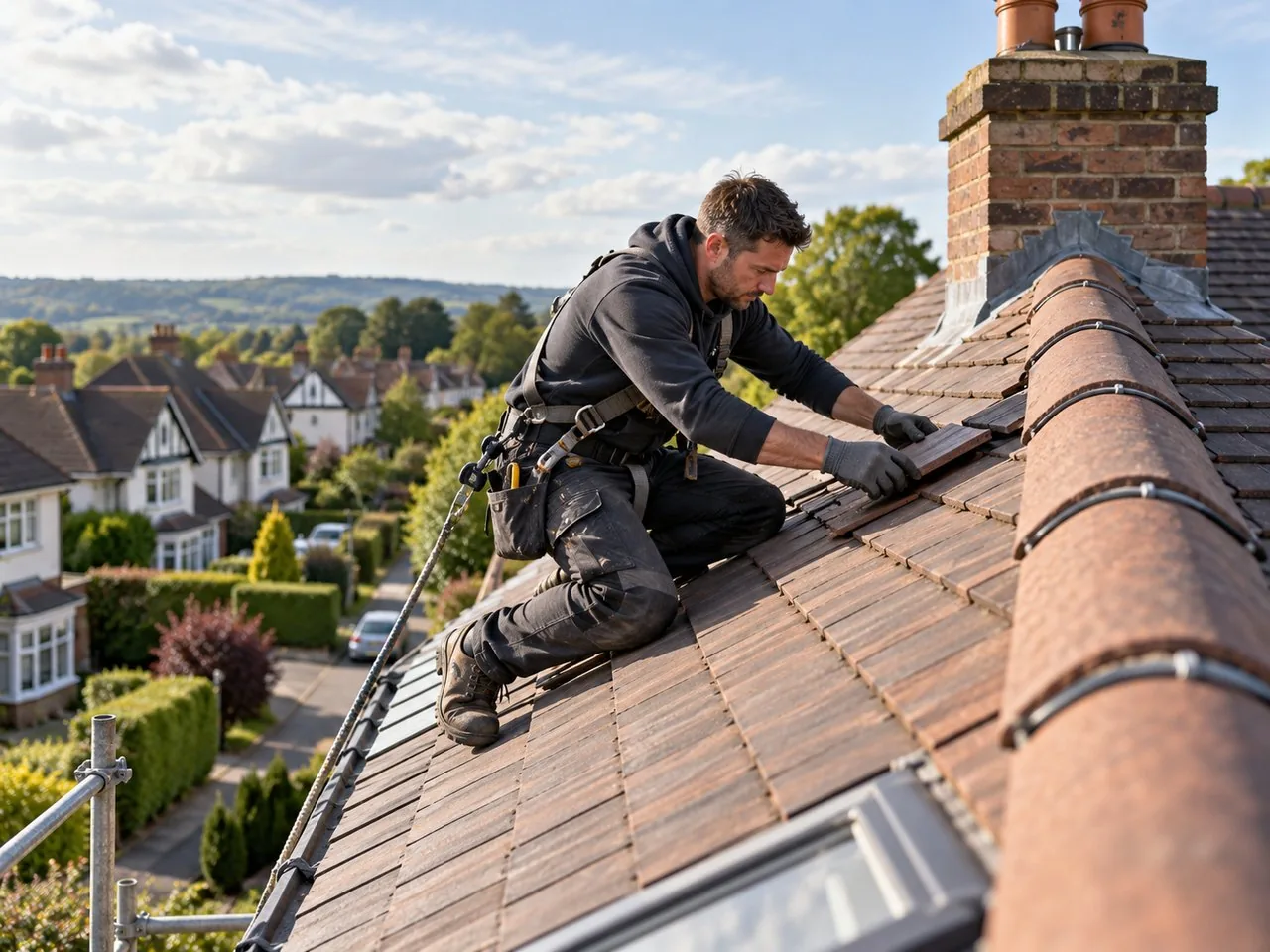
The clearest signs to look out for
Some roof problems are visible from the ground, while others first show up inside the house. Don't climb onto the roof to investigate. Binoculars can help you spot obvious changes safely, but a roofer should take a closer look.
Missing, slipped, cracked or loose tiles and slates.
A sagging ridge line, or ridge tiles that look out of place.
Damaged mortar, loose brickwork or cracks around a chimney stack.
Split, lifted or loose flashing around chimneys, walls, roof windows or other joins.
Water stains, peeling paint, damp patches or mould on upstairs ceilings and walls.
Drips in the loft, damp insulation or daylight showing through the roof.
Standing water, blisters, splits or lifted edges on a flat roof.
Gutters that overflow in normal rain, sag, leak at the joints or pull away from the fascias.
Why small roof problems can turn into bigger repairs
Your roof is there to shed water. If a tile, slate, ridge or flashing detail is damaged, rain can get into the layers underneath. It can run along battens, underlay or timbers before showing up indoors, so a ceiling stain is not always directly below where the water got in.
Gutters matter too. A blockage, cracked joint or loose bracket can send water over walls and fascias instead of down the downpipe. Putting it right early is often simpler than waiting for nearby timber to get wet and damaged.
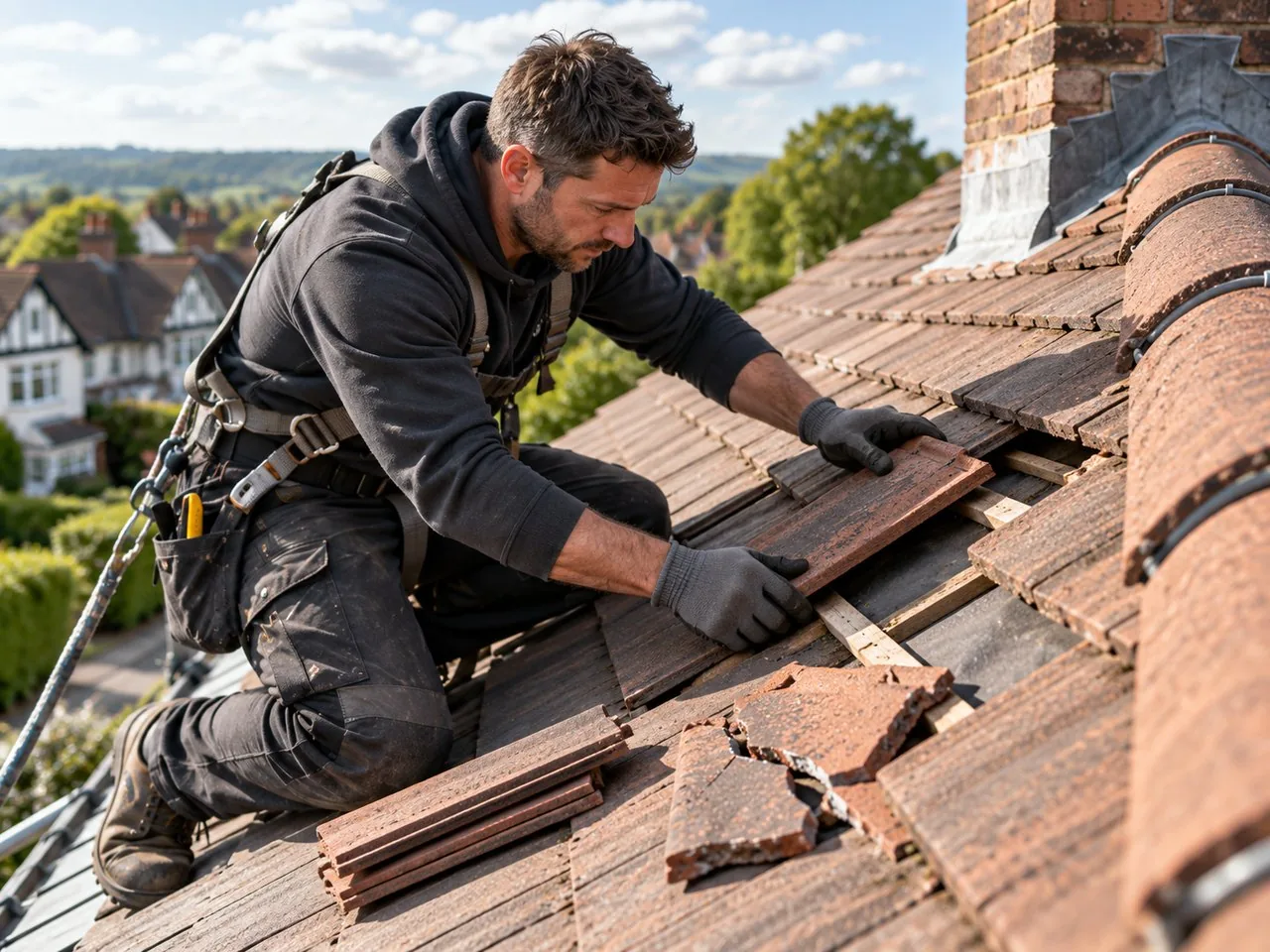
Not every problem means the whole roof needs replacing. Damage in one part may be repaired by replacing tiles, securing ridges, repairing a valley or renewing worn flashing. The right option depends on how far the problem has spread, not only on the first sign you can see.
Pay attention to leaks and damp inside
A leak is a clear reason to arrange a check, but don't ignore the earlier signs. Brown rings on a ceiling, a musty smell in the loft, damp insulation or bubbling paint after rain can all mean water is getting through the roof or around one of its joins.
Make a note of when you first spotted it and whether it appears after rain or wind. If it's safe, place a container under an active drip and move belongings out of the way. Don't poke a wet ceiling or try to seal the roof from inside. That may hide the water without fixing where it is getting in.

Chimneys, flashing and roof junctions need close attention
Roof joins are common places for water to get in. Flashing is the shaped material that seals around chimney stacks and where walls meet the roof. If it has split, lifted, come loose or stopped sealing properly, it may need leadwork repairs.
A chimney can also have problems with its brickwork, mortar, render, pots or flashing. Watch for loose material, visible cracks, staining around the chimney breast or pieces on the ground. Chimney repairs deal with the stack and the parts that keep water out, rather than treating every leak as a general roof problem.
Flat roof warning signs are different
Water on a flat roof should drain away, rather than sit in one place for a long time. Standing water, cracked surfaces, blisters, open seams, split edges and lifted trims are all worth getting checked. Water marks below a flat roof can mean the surface or an edge detail is letting water through.
Don't assume a patch will always sort it. The size of the damaged part, the condition of the material around it and how often the problem comes back can show whether a flat roof repair is suitable.
Repair or replacement: how to think about the choice
A repair often makes sense when the problem is limited to one area and the rest of the roof is sound. Replacing a few broken tiles, renewing flashing or repairing a leak in one spot can stop water getting in without changing the whole roof.
It may be time to talk about roof replacement if repairs keep coming back, damage covers large areas or one-off fixes are unlikely to last. A check should show what needs repairing, what is still sound and the practical options before you decide.
Cost is not only about the first price. It can depend on the amount of damage, access, nearby roof details and whether a repair is likely to fix the cause rather than only what you can see. We'll explain what we find in plain English so you can decide what works for you.
What to do if you think your roof needs attention
Start with what you can safely see from the ground and inside the loft. Take photos of ceiling marks, loose tiles visible from below or water coming through, and note any changes after rain. This gives a roofer a useful starting point.
Don't walk on the roof, lean ladders against gutters or try to put loose tiles back yourself. If something has fallen, keep people away from the area below it. Contact us to arrange a look at the problem, and we'll talk you through the repair options once we've checked the roof.
Morecambe Roof Repairs carries out roof repairs, along with specialist work on chimney details, flashing and roof replacement where that is the better option. Tell us what you've noticed and when it started, and we'll take it from there.
Frequently asked questions
Can a missing tile cause a roof leak?
Yes. A missing, slipped or cracked tile can let rain reach the underlay and battens beneath it. Water may travel before it shows indoors, so it is best to arrange a check rather than wait for a ceiling stain.
How do I know if a roof leak is coming from the chimney?
Staining on the chimney breast, damp near the stack or a leak around its edges can point to a chimney or flashing problem. The source is not always clear from inside because water can run along roof timbers. A close roof check can show whether the problem is the stack, flashing or another nearby detail.
Should I repair a flat roof with standing water on it?
Standing water can point to a drainage or surface problem, especially if it stays for a long time after rain. Also look for splits, blisters, open seams and leaks below the roof. A roofer can check whether a repair in one area will sort it or whether the flat roof needs more work.
When is roof replacement better than repeated repairs?
Replacement may be the better option when problems are widespread, repairs keep failing or the roof is in poor shape across a large area. One problem in a small area does not automatically mean you need a new roof. The choice should be based on the overall condition of the roof and whether a repair is likely to be worthwhile.
Can blocked gutters damage the roof?
Blocked or leaking gutters can overflow onto fascias, walls and the roof edge. Over time, this can lead to damp and wear around those areas. Clearing the blockage and repairing damaged gutter joints, brackets or fascias can help water drain properly again.
Noticed a possible roof problem?
Call Morecambe Roof Repairs on 01524123456 or get in touch. We'll take a look and explain your repair options.